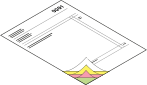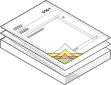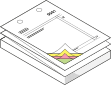
If you’re ordering NCR Pads, NCR Books, NCR Loose Sets or other carbonless forms, you’ll often come across technical printing terms that may not be familiar. While they can seem confusing at first, understanding the terminology makes it much easier to choose the right product for your business.
This glossary explains some of the most common NCR Printing terms in simple, easy-to-understand language.
Jump to a term:
Artwork | Artwork Proof | Black Spine Tape | Bleed | Carbonless Copy Paper | CB Paper | CF Paper | CFB Paper | CMYK | Collated Sets | Collating | Continuous NCR Forms | Crash Numbering | Crop Marks | Desensitising Ink | Desk Pads | Digital Forms | Digital Printing | Dot Matrix Printer | Drilled Holes | Fan-Apart Glue | Finished Size | Front Cover | Grey Board Back | Hatching | Impact Printer | Lithographic Printing | Micro Perforation | NCR Books | NCR Loose Sets | NCR Pads | NCR Paper | Pantone® Colour | PDF | PDF Proof | Perforation | Reel-Fed Printing | Register Sets | Safe Area | Sequential Numbering | Sheet-Fed Printing | Spot Colour | Sprocket Holes | Standard Perforation | Trim Size | Wrap Around Front Cover | Wrap Around Writing Shield | Writing Shield
Artwork is the print-ready file supplied for production. Most professional printers prefer artwork to be supplied as a high-resolution PDF with fonts embedded and any images saved at a minimum of 300dpi.
Before printing begins, the artwork is normally checked using an artwork proof or PDF proof.
Also see Bleed, Crop Marks, Safe Area and PDF.
An artwork proof is a digital representation of the design supplied before printing begins. It allows you to check the layout, spelling, contact details, numbering, colours and positioning before production.
Once the proof has been approved, it is used as the basis for printing.
Also see PDF Proof and Artwork.
Black spine tape is a durable cloth tape applied over the stapled edge of an NCR Book. It conceals the staples, strengthens the binding and gives the finished book a clean, professional appearance.
It is commonly used with a Front Cover.
Bleed is the area of artwork that extends beyond the trim size. It ensures colours and images print right to the edge of the page without leaving unwanted white borders.
Also see Crop Marks, Finished Size and Safe Area.
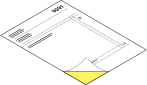
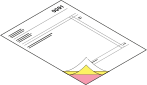
Carbonless copy paper is specially coated paper that creates duplicate, triplicate or quadruplicate copies without using traditional carbon paper. It is also commonly referred to as NCR Paper (No Carbon Required).
Read our guide to Carbonless Copy Paper.
CB paper is always the top sheet in an NCR set. The back of the sheet contains microscopic capsules that release a colourless dye when pressure is applied with a pen.
Read our guide to CB, CFB & CF Paper.
CF paper is the final sheet in an NCR set. It receives the transferred image from the sheet above but does not pass it on any further.
Read our guide to CB, CFB & CF Paper.
CFB paper is used as the middle sheet in multi-part NCR forms. It receives the image from the sheet above while also transferring it to the sheet below.
Read our guide to CB, CFB & CF Paper.
CMYK stands for Cyan, Magenta, Yellow and Black. These four inks are combined during the printing process to produce full-colour artwork and photographs.
Unlike a spot colour, which uses a pre-mixed ink, CMYK creates colours by combining the four process inks.
A collated set is a group of NCR sheets arranged in the correct order before being glued, stapled or supplied as loose sets.
Collating is the process of arranging individual NCR sheets into the correct order before they are glued into pads, stapled into books or supplied as loose sets.
Continuous NCR forms are carbonless forms manufactured in a continuous run rather than as individual sheets. They normally have sprocket holes along both sides to allow them to be fed through a compatible impact printer or dot matrix printer.
They are commonly used for invoices, delivery notes, payslips, statements and other documents produced in higher volumes.
Crash numbering is a method of applying sequential numbers to all parts of an NCR set by using pressure to transfer the number through the collated sheets.
This ensures every sheet within the same set receives an identical reference number.
Also see Sequential Numbering and Collated Sets.
Crop marks are small lines positioned outside the finished artwork that show where the printed sheet should be trimmed.
They help the printer cut the product accurately to its trim size.
Also see Bleed and Finished Size.
Desensitising ink prevents carbonless paper from reacting in selected areas of the form. It is commonly used where information should not transfer to the copies beneath.
Read our guide to Desensitising Ink.
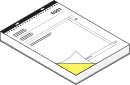
Desk pads are larger writing pads designed to sit on a desk or counter. They may be produced using standard paper or carbonless paper and are commonly used for order taking, quotations, notes and other frequently completed forms.
They are normally glued at one edge and supported by a grey board back.
Digital forms are the modern-day alternative to traditional paper-based forms. Instead of completing forms by hand, users complete them on a smartphone, tablet or computer.
Digital forms can include many of the same features as printed NCR forms, such as customer details, signatures, dates and sequential numbering. They also offer additional benefits, including automatic PDF generation, instant email delivery, secure cloud storage and access from almost anywhere.
While paper NCR forms remain the preferred choice for many businesses, digital forms are becoming increasingly popular where instant sharing, remote working, field-based teams and electronic record keeping are important.
Digital printing transfers artwork directly from a digital file to the printing press without requiring traditional printing plates.
It is particularly suitable for shorter print runs, personalised printing and jobs requiring a faster turnaround. Because there are fewer setup requirements, digital printing can often be more economical for smaller quantities.
Also see Lithographic Printing.
A dot matrix printer is a type of impact printer that uses a print head containing pins to strike an ink ribbon against the paper.
Because physical pressure is applied during printing, dot matrix printers can produce information on multiple parts of Continuous NCR Forms.
Drilled holes are holes punched into the sheets to allow them to be stored in a ring binder or lever arch file.
The most common options are 2 hole and 4 hole drilling, although single holes are sometimes required. Holes can be positioned on any edge of the product to suit your filing system. They are commonly added to NCR Pads, NCR Books, NCR Loose Sets and Desk Pads.
Watch our Drilled Holes video.
Fan-apart glue is a specialist adhesive used when producing loose NCR sets. It bonds the correctly coated sheets within each set while allowing the finished sets to separate from one another when the stack is fanned apart.
It helps keep the sheets correctly collated during production.
Also see NCR Loose Sets.
Finished size is the final width and height of a printed product after it has been trimmed and all production processes have been completed.
It is usually the same as the trim size. Artwork that prints to the edge should extend beyond this size to include bleed.
A front cover is a protective card cover attached to the front of an NCR Book. It is stapled together with the NCR paper, with black spine tape applied over the staples to provide a neat finish and additional strength.
The front cover helps protect the forms during storage and everyday use while giving the finished book a professional appearance.
Also see Grey Board Back and Wrap Around Front Cover.
Watch our Front Cover video.
A grey board back is the thick, rigid backing board attached to the back of an NCR Pad, NCR Book or Desk Pad. It provides a firmer writing surface while also protecting the product during storage, transport and everyday use.
A grey board back provides support but does not prevent writing from transferring to the sets beneath. For that, a writing shield should be used.
Hatching is a printed pattern applied to selected areas of an NCR form to make any transferred writing difficult or impossible to read.
Unlike desensitising ink, which prevents the writing from transferring in the first place, hatching allows the writing to copy through but obscures the transferred information with a printed pattern.
Hatching is commonly used to protect sensitive information while still allowing pressure to pass through the entire NCR set.
Also see Desensitising Ink.
An impact printer creates an image by physically striking an ink ribbon against the paper.
The pressure allows information to transfer through multi-part Continuous NCR Forms. A dot matrix printer is a common type of impact printer.
Lithographic (litho) printing uses printing plates to transfer ink onto paper. It is generally best suited to medium and longer print runs, where the setup cost can be spread across a larger quantity.
Lithographic printing offers excellent print quality, consistent colour reproduction and a wide choice of specialist inks and finishes.
Also see Digital Printing.
Micro perforation uses very fine cuts with small connecting ties, producing a cleaner and neater edge when the sheet is removed.
It is often chosen where the detached document requires a more professional appearance.
Also see Perforation and Standard Perforation.
NCR books contain carbonless forms that are stapled together with a front cover. Each page is normally perforated, allowing the original to be removed while the copy can remain in the book for storage, if required. They are commonly used as Invoice Books and Receipt Books.
They may also include an attached wrap-around writing shield.
Loose sets are individually collated NCR forms supplied without binding into a pad or book.
During production, the sheets within each set are normally glued together using fan-apart glue, allowing the finished sets to separate easily while keeping each NCR set correctly collated.
Where required, NCR paper can also be supplied as individual sheets without being glued into sets. These may be supplied either collated or uncollated for other applications, such as overprinting through a compatible printer.
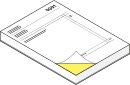
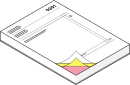
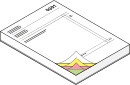
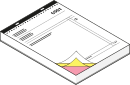
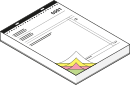
NCR pads are sets of carbonless paper glued together at one edge. They are commonly used for invoices, receipts, delivery notes, quotations and job sheets.
Unlike NCR Books, completed sets are removed from the pad in their entirety, so no duplicate copy can remain in the pad for storage. Books, however, allow the original to be removed while the duplicate copy can remain bound for storage, if required.
NCR Paper (No Carbon Required) is another name for carbonless copy paper. Although the term originally referred to paper developed by the National Cash Register Company, it is now widely used to describe carbonless paper in general.
Read our guide to NCR Paper.
A Pantone colour is a standardised spot colour used to ensure colour consistency across different print runs and products.
Visit the official Pantone website to learn more about the Pantone Matching System.
PDF (Portable Document Format) is the industry standard file format for supplying artwork for professional printing. It preserves fonts, images, colours and page layout, ensuring the artwork prints as intended regardless of the computer or software used to create it.
Most commercial printers recommend supplying artwork as a high-resolution PDF with fonts embedded and images saved at a minimum of 300dpi. This helps avoid common issues such as missing fonts, text reflow and low-quality images.
Before printing begins, you’ll usually receive a PDF Proof for approval, allowing you to check the artwork before production starts.
Also see Artwork.
A PDF proof is an electronic proof supplied as a PDF file for approval before printing begins.
It allows you to check the wording, layout, numbering positions and other artwork details on screen. A PDF proof is not normally intended to guarantee an exact colour match because screen colours can vary.
Also see Artwork Proof and PDF.
Perforation is a line of small cuts or holes that allows a full page or section of a page to be removed cleanly from an NCR book, pad, loose set or continuous form.
Standard perforation uses a more visible cut-and-tie pattern and is commonly used where pages need to be removed easily by hand, such as from NCR books. Also see Standard Perforation.
Micro perforation uses much finer cuts to create a cleaner, neater edge when the sheet is removed.
Also see Micro Perforation.
Reel-fed (web-fed) printing uses continuous rolls of paper rather than individual sheets. It is commonly used for high-volume production, such as continuous NCR forms.
Register sets are individual multi-part carbonless forms designed for use with a register set holder, such as a Twinlock or Scribe system. The forms are normally held securely in position while they are completed, allowing information to transfer through each part of the set.
They are often used for invoices, receipts, delivery notes and other business forms where a portable, organised writing system is required.
The safe area is the area of your artwork where important text and logos should be placed to prevent them being trimmed during production.
Sequential numbering gives each form a unique number in ascending order, making it easier to track invoices, receipts and other business documents.
For example:
0001
0002
0003
0004
The numbers may be applied using crash numbering, depending on the product and production method.
Read our guide to Sequential Numbering or watch our Sequential Numbering video.
Sheet-fed printing uses individual sheets of paper and is commonly used for NCR Pads, NCR Books, NCR Loose Sets and other short to medium print runs requiring excellent print quality.
A spot colour is a pre-mixed ink printed as a single, solid colour rather than being created using CMYK process inks.
Spot colours are often used to reproduce company logos accurately.
Also see Pantone® Colour.
Sprocket holes are the evenly spaced holes running along the sides of continuous stationery. They engage with the tractor-feed mechanism of a compatible impact printer or dot matrix printer, helping the paper move through the printer accurately and continuously.
The perforated side strips containing the sprocket holes can usually be removed after printing if they are not required on the finished document.
Standard perforation uses a more open cut-and-tie pattern, making pages easy to remove by hand.
It is commonly used in NCR Books and other products where straightforward removal is more important than achieving an exceptionally smooth edge.
Also see Perforation and Micro Perforation.
Trim size is the intended width and height of a printed product after the excess paper has been cut away.
The trim position is normally indicated by crop marks. Artwork that reaches the edge should include bleed beyond the trim size.
Also see Finished Size.
A wrap around front cover is a protective cover commonly fitted to NCR Pads and Desk Pads. It is glued to the Grey Board Back and folds around to the front of the pad, helping to protect the forms during storage, transport and everyday use.
Unlike a Wrap Around Writing Shield, its primary purpose is protection rather than preventing writing from transferring onto the sets beneath.
An NCR Pad can be supplied with both a wrap around front cover and a wrap around writing shield.
Watch our Wrap Around Front Cover video.
A wrap around writing shield is attached to an NCR Pad or NCR Book and folds underneath the set being completed.
It prevents pressure from transferring to the unused sets beneath and remains attached to the product so it is less likely to be misplaced.
Also see Writing Shield and Grey Board Back.
Watch our Wrap Around Writing Shield video.
A writing shield is a rigid board placed underneath the set being written on. It prevents pressure from transferring onto additional sets beneath, ensuring only the intended copies are produced.
A writing shield should always be placed directly underneath the set being completed. It can be supplied as a loose piece of card or attached to the pad or book as a wrap around writing shield.
A writing shield performs a different role from a grey board back, which supports and protects the product but does not prevent image transfer.
Whether you need NCR Pads, NCR Books, NCR Loose Sets or simply need advice on NCR Printing, paper types, numbering or artwork, our experienced team will be happy to help you choose the right product for your business: 0330 111 5040